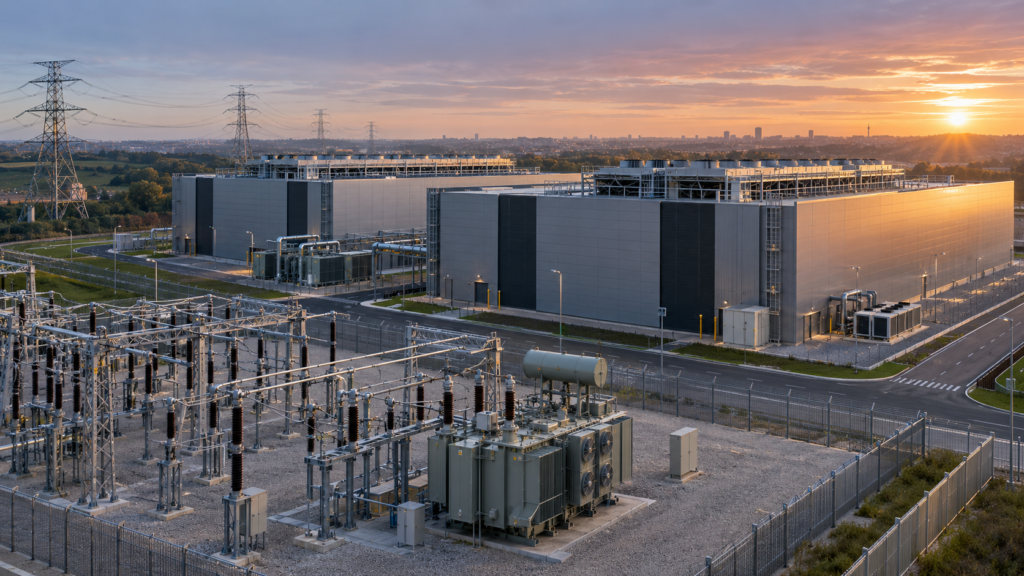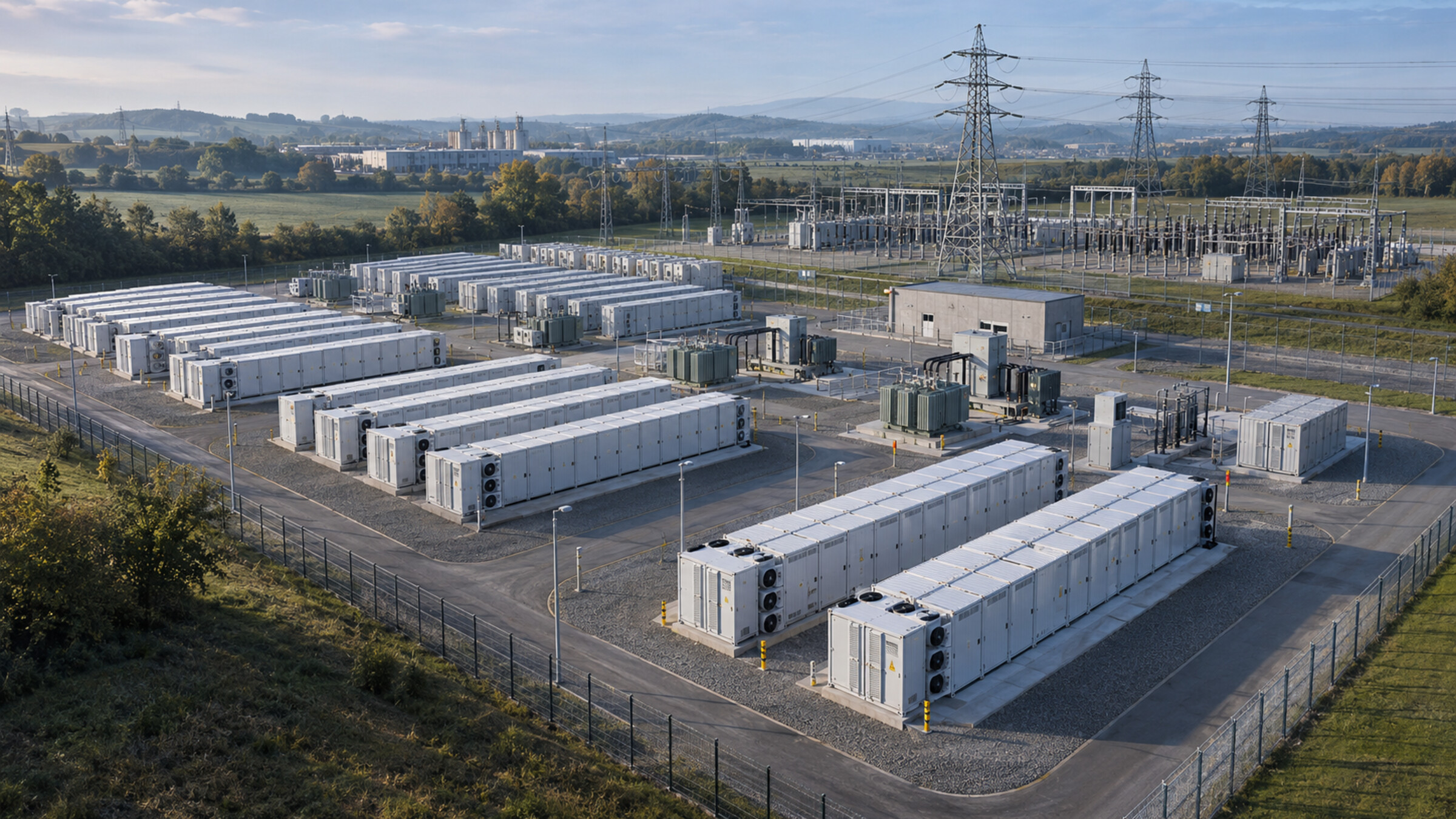
A €835 million financing arrangement announced by European battery developer Return illustrates the increasing importance of portfolio-based financing in energy storage. SMAM examines how physical infrastructure, commercial flexibility agreements and capital structures are converging—and what this means for developers, investors, industrial companies and the emerging economics of electricity-system flexibility.
Battery storage is entering a new stage of financial development.
A €835 million financing agreement announced on 4 November illustrates
how European lenders are beginning to support portfolios of storage
assets rather than relying exclusively on individual project structures.
For developers, infrastructure investors and industrial groups, the
strategic significance extends beyond additional financing capacity. It
concerns how physical assets, commercial flexibility agreements and
financial risks can be organised into scalable investment
platforms.
Europe’s electricity system is becoming increasingly dependent on
flexibility.
The continued expansion of renewable generation is changing the
relationship between electricity supply, consumption and market prices.
Solar and wind production fluctuate according to weather conditions,
while industrial activity, transport electrification and digital
infrastructure create increasingly complex demand patterns.
Battery energy storage systems offer one means of managing these
fluctuations.
Their ability to absorb electricity, store it and release it when
required creates opportunities across wholesale electricity markets,
balancing services and grid-support activities.
However, the investment requirements are substantial, and the
commercial arrangements supporting battery projects remain more complex
than those associated with many conventional infrastructure assets.
On 4 November 2026, European battery storage
developer Return announced a €835 million portfolio-financing
arrangement underwritten by Deutsche Bank and Rabobank to
support its expansion in Germany.
The financing combines physical battery infrastructure with Return’s
Virtual Flexibility Portfolio, which allows customers to access
flexibility across multiple storage facilities.
The initial framework covers three German projects representing 117
MW of battery capacity. Return intends to add further eligible projects
and aims to install at least 1 GW annually in Germany from 2027, subject
to market conditions.
The announced €835 million represents a financing framework, not
confirmation that the entire amount has been drawn or invested. Return
The transaction provides a useful illustration of a broader
development in infrastructure finance.
As battery storage markets mature, lenders and investors are
increasingly required to evaluate not only individual assets but also
the commercial platforms through which those assets generate
revenues.
This introduces a different relationship between operational
capacity, contractual commitments and financial risk.
The transaction details and institutional research cited below are
sourced facts. The financing and strategic implications developed
throughout the article represent SMAM analysis.
The
financing unit is moving beyond the individual project
Conventional project finance is generally organised around a clearly
identified asset.
A project company develops, owns and operates infrastructure, while
lenders assess its construction programme, contractual revenues,
operating costs and ability to service debt.
This approach remains relevant for battery storage.
However, financing each facility separately can create considerable
transaction costs for developers pursuing substantial investment
programmes.
Every project may require its own financial model, documentation, due
diligence and financing negotiations.
The resulting processes can become difficult to replicate when a
developer seeks to construct numerous facilities across different
locations.
Portfolio financing offers an alternative.
Rather than evaluating every asset through an entirely independent
financing process, lenders can establish a framework accommodating
multiple eligible projects.
The structure may permit additional assets to enter the financing
perimeter as they satisfy defined technical, commercial and financial
requirements.
Return’s November announcement describes precisely this
objective.
Its framework is intended to enable eligible German battery projects
to access financing without repeating the entire transaction process for
each development. Return
The significance is not simply administrative efficiency.
A portfolio approach can support a more coordinated
capital-allocation strategy, potentially enabling developers to manage
construction expenditure, financing availability and operational
deployment across multiple assets.
Nevertheless, the underlying project risks remain.
Each facility must still secure appropriate permits, establish grid
access, complete construction and demonstrate commercially viable
operations.
Portfolio financing can improve the organisation of these risks.
It cannot eliminate them.
Battery
storage is becoming a commercial service, not merely a physical
asset
The economic value of battery infrastructure increasingly depends on
the services it can provide.
A storage facility may earn revenues by purchasing electricity when
prices are relatively low and selling it during periods of higher
demand.
It may also participate in balancing markets or provide services that
help electricity-system operators maintain stability.
These activities have different revenue characteristics and
contractual requirements.
The International Energy Agency’s Electricity 2026 report
identifies battery storage as an increasingly important source of
short-term power-system flexibility, supporting renewable integration,
system balancing and electricity security. IEA
For investors, however, the existence of several potential revenue
sources does not necessarily establish predictable cash flow.
Wholesale electricity prices fluctuate.
Balancing-service markets can become more competitive as additional
storage capacity enters the system.
The technical availability of a battery does not guarantee that it
can profitably participate in every market opportunity.
Commercial arrangements designed around access to flexibility can
address some of these uncertainties.
In September 2026, Return and Centrica Energy announced a long-term
virtual tolling agreement covering 100 MW / 400 MWh of
battery flexibility in Germany.
Rather than relying on one dedicated installation, the arrangement
provides access to capacity through Return’s wider portfolio.
Separately, Return announced an expansion of its German flexibility
partnership with ENGIE to 400 MW. Return
These agreements demonstrate how commercial customers can obtain
flexibility services without owning or operating the underlying
infrastructure.
For developers, such arrangements can help establish contractual
relationships that support investment planning.
For customers, they can provide access to operational capabilities
without requiring equivalent direct capital expenditure.
However, the precise allocation of pricing, utilisation, market and
performance risks depends on the relevant agreements.
The existence of contracted flexibility capacity should not
automatically be interpreted as guaranteed fixed revenue or as evidence
that all associated physical capacity is already operational.
That distinction is essential when evaluating financing capacity.
Portfolio
financing changes the distribution of risk
Combining several assets within one financing structure can create
diversification benefits.
A portfolio containing facilities at different locations may reduce
dependence on the operating performance of one installation.
Individual outages, maintenance requirements or local grid
constraints may have less impact on the portfolio’s aggregate
availability than on a standalone project.
However, diversification depends on the nature of the underlying
risks.
Battery installations operating within the same electricity market
can remain exposed to highly correlated commercial conditions.
A reduction in price volatility, increased competition for balancing
services or changes in market rules may affect several facilities
simultaneously.
Consequently, a portfolio containing numerous projects does not
necessarily possess diversified revenue exposure.
This distinction matters for lenders.
Credit assessment must consider the financial performance of
individual assets alongside the economic behaviour of the portfolio as a
whole.
It must also examine the extent to which financing obligations are
shared.
Cross-collateralisation, cash-distribution restrictions, reserve
requirements and contractual remedies can influence how difficulties at
one project affect other assets.
The detailed terms of Return’s financing arrangement have not been
publicly disclosed, so no conclusion should be drawn about its specific
leverage, security package or recourse provisions.
Nevertheless, the broader underwriting question is clear.
A lender financing a portfolio must establish whether the benefits of
aggregation compensate for the additional contractual and operational
interdependencies it introduces.
For equity investors, the same assessment influences capital
allocation.
Portfolio scale may improve operating efficiency and commercial
negotiating power, but it can also concentrate exposure to one market,
technology or operating platform.
The appropriate financing structure must reflect these dependencies
rather than rely exclusively on the number of underlying assets.
Revenue
certainty remains central to infrastructure bankability
The financing of battery storage differs from many traditional
infrastructure investments because commercial revenues may depend
heavily on changing electricity-market conditions.
A regulated network asset may benefit from a comparatively
predictable remuneration framework.
A battery participating primarily in wholesale arbitrage can face
considerably greater revenue volatility.
The distinction influences the amount and type of debt the asset can
support.
Long-term capacity agreements, tolling contracts and other commercial
arrangements can potentially reduce uncertainty.
However, their financial value depends on contractual provisions,
customer creditworthiness and the allocation of operating risks.
A useful comparison is provided by a separate European
transaction.
In June 2026, Erste Group announced financing alongside Siemens
Financial Services for a 150 MW / 300 MWh battery project in
Poland.
The project benefits from a 17-year capacity-market contract, which
played an important role in supporting its financing structure. Erste
Group
This represents a different commercial model from a portfolio
combining multiple assets and flexibility arrangements.
Neither approach is inherently superior.
Their suitability depends on the underlying market, the risk-sharing
arrangements and the investment objectives of the shareholders.
The financial challenge is to distinguish between expected revenues
and revenues supported by enforceable contractual obligations.
A battery may be technically capable of participating in several
electricity markets, but the corresponding income cannot necessarily be
assumed to materialise simultaneously.
Investment models must also incorporate operating costs, battery
degradation, replacement expenditure and the possibility that commercial
opportunities become less profitable as competing capacity expands.
For shareholders and lenders, revenue diversification should
therefore be tested economically rather than treated as an automatic
consequence of access to multiple markets.
Grid
access and operational execution remain decisive constraints
The expansion of portfolio financing does not remove the physical
limitations affecting battery deployment.
Grid connectivity remains a critical development requirement.
A project may possess suitable land, an attractive commercial
strategy and access to financing while still facing significant delays
in obtaining a viable connection.
Planning permissions, environmental requirements, equipment
procurement and local operating conditions can further affect
commissioning schedules.
The IEA’s 2026 electricity analysis identifies grid-connection
delays, permitting requirements and uncertain revenue streams among the
principal obstacles facing utility-scale battery projects.
Its research also highlights the rapid expansion of global storage
capacity and the continuing importance of electricity-market design. IEA
For developers, these constraints have direct financial
consequences.
Construction delays can defer expected revenues while increasing
development expenditure and financing costs.
Grid restrictions may reduce the commercial value of an otherwise
operational facility.
Equipment performance and degradation can influence the amount of
flexibility available over the investment horizon.
From a capital-allocation perspective, the distinction between a
development pipeline and an operational portfolio is therefore
fundamental.
A developer may control projects representing several gigawatts of
potential capacity without possessing an equivalent amount of
commissioned, revenue-generating infrastructure.
Financing structures should recognise these different development
stages.
Capital committed to projects awaiting permits or grid connections
carries a different risk profile from debt financing fully operational
assets.
For investment committees, this makes independently verified
development milestones an important component of financing
discipline.
The
strategic opportunity extends beyond battery developers
The expansion of energy-flexibility infrastructure creates
opportunities for a broader range of corporate and financial
participants.
For infrastructure investors, battery portfolios represent potential
exposure to electricity-system services supported by physical
assets.
However, investment returns will depend on commercial execution,
market design and the sustainability of operating revenues.
For family offices, direct or fund-based participation may offer
access to an expanding infrastructure segment, but the appropriate
investment horizon and risk tolerance require careful consideration.
For industrial companies, flexibility arrangements may provide
opportunities to optimise electricity procurement and manage exposure to
changing power-market conditions.
The economic benefit will depend on the company’s consumption
profile, existing supply contracts and the terms of the proposed
flexibility arrangement.
For mid-market businesses operating in engineering, electrical
systems, automation and industrial services, the expansion of storage
infrastructure can create additional commercial opportunities.
Nevertheless, participation in these supply chains may require
investment in technical qualifications, specialised equipment and
working capital.
The governance implications are equally important.
Where companies establish international battery platforms, management
must determine how project ownership, financing obligations, operating
responsibilities and commercial rights are allocated between holding
companies and local subsidiaries.
These decisions influence cash flows, creditor protections,
shareholder rights and the capacity to expand into additional
jurisdictions.
A scalable financing framework must therefore be accompanied by an
equally coherent operating and corporate structure.
For investors, the quality of that structure is becoming an
increasingly important component of the investment case.
SMAM Perspective
The €835 million financing arrangement announced by Return
illustrates a meaningful development in the organisation of European
energy infrastructure investment.
As battery storage capacity expands, the relevant financing question
increasingly extends beyond the viability of individual
installations.
Developers must establish how multiple assets can be combined within
structures that support commercial commitments, operational resilience
and sustainable financing.
For private-capital investors, portfolio aggregation creates
potential benefits but also requires more detailed assessment of revenue
correlation, counterparty exposure and financing obligations.
For industrial groups, energy flexibility is becoming a commercial
service that can potentially be accessed without direct infrastructure
ownership.
The long-term investment value of battery storage will depend
not simply on the capacity installed, but on the ability to organise
that capacity into financially sustainable and commercially effective
infrastructure platforms.
The emergence of portfolio-based financing represents an important
step in that development.
Selected Sources
- Return — €835 Million German Portfolio Financing
- International Energy Agency — Electricity 2026: Flexibility
- Return and Centrica Energy — Virtual Tolling Agreement
- Return and ENGIE — German Flexibility Partnership
- Erste Group — Jedwabno Battery Storage Financing
- International Energy Agency — Electricity Mid-Year Update 2026
- Bundesnetzagentur — Electricity Storage Market Integration
Related Insight
When Power Becomes Part of the Investment Case
SMAM examines why reliable electricity is increasingly influencing project viability, capital efficiency, industrial location and strategic execution.